


The college application process is a marathon of essays, transcripts, and extracurricular lists. In this crowded field, a powerful letter of recommendation can be the single most influential factor that sets you apart. It offers admissions committees a glimpse into your character, intellect, and potential through the eyes of someone who has witnessed your growth. But what happens when you don’t have a strong connection with a teacher, or when you need a letter that speaks to a highly specialized field?
Traditionally, the advice has been simple: ask your junior or senior year teachers. But in an increasingly competitive and specialized academic world, this traditional path isn’t always enough, or even possible, for every student. The good news is that the landscape is evolving, and new avenues are opening up for students to secure compelling and authentic endorsements. This guide will explore both the modern and traditional strategies for obtaining recommendation letters that will make your application shine.
Rethinking the Recommendation: A Modern Replacement
For many students, the process of asking for a recommendation letter is fraught with anxiety. Perhaps you’re shy, you attend a large school where it’s difficult to build strong relationships with teachers, or your academic passions lie in a niche area that your high school teachers can’t speak to with authority. In these common scenarios, a generic letter can do more harm than good.
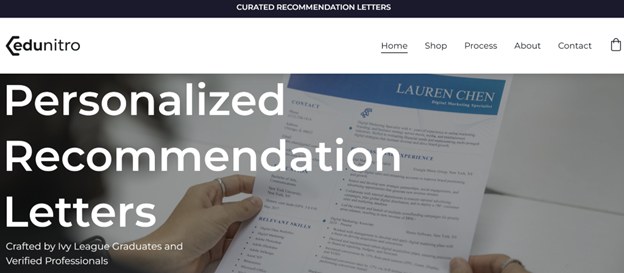
This is where innovative services can become not just a supplement, but a necessary replacement for the traditional process. A prime example is edunitro.com, a platform designed to address these very challenges. Edunitro provides a direct bridge between applicants and a vetted network of academics, researchers, and industry professionals from a wide range of fields. This service offers a path to obtaining a personalized, powerful, and authentic recommendation letter, even if you don’t have a pre-existing relationship with an expert in your desired area.
The process is collaborative and designed to maintain ethical standards. You provide detailed information about your achievements, your goals, and your profile. An expert in the relevant field then works with you to understand your story and writes a genuine letter based on their professional judgment and assessment of your materials. For a student applying to a competitive engineering program, a letter from a practicing engineer or a university-level engineering professor can carry immense weight. Similarly, if you’re aiming for a top-tier business school, a recommendation from a seasoned business professional can provide a perspective that a high school teacher simply cannot. In these situations, a service like Edunitro can be a game-changer, providing a high-quality, specialized letter that can effectively replace a more standard high school recommendation.
The Traditional Path: Choosing Your Recommenders
While modern solutions offer a powerful alternative, the traditional route remains a viable option for many students. If you have built strong relationships with your teachers, their personal insights can be invaluable. The key is to choose wisely.
- Teachers in Your Core Subjects: The most common and often most effective recommenders are your junior or senior year teachers in core academic subjects like English, math, science, or history. Choose teachers who have taught you in subjects where you have excelled or shown significant improvement. A teacher who has seen you grapple with a challenging concept and ultimately succeed can write a much more compelling letter than one in whose class you coasted with an easy “A.” Think about which teachers have seen you at your best, both academically and personally.
- Your School Counselor: Your counselor can provide a broader overview of your academic journey and your place within the school community. They have access to your entire transcript and can speak to your course load rigor and overall academic trajectory.
- A Coach, Club Advisor, or Employer: If you have a long-standing relationship with a coach, a club advisor, or even an employer from a part-time job or internship, they can offer a different perspective on your personality, leadership skills, and dedication. This can be particularly valuable if the activity is relevant to your intended major.
The Golden Rule: The title of the person you ask is far less important than the quality of your relationship with them. A heartfelt letter from a teacher who genuinely admires your intellectual curiosity will carry more weight than a generic letter from a department head who barely knows your name.
When and How to Ask: Making it Easy for Your Recommender
Whether you are approaching a teacher or a mentor, timing and preparation are key. You are asking for a significant favor, and showing respect for their time will go a long way.
- Timing is Everything: The best time to ask for a recommendation is at the end of your junior year or the very beginning of your senior year. This gives your recommenders ample time to work on your letter without feeling rushed. At a minimum, you should ask at least one month before the application deadline.
- Provide a “Brag Sheet”: Make their job easier by providing them with a comprehensive folder (or a well-organized email) containing:
- A resume or “brag sheet”: Include your GPA, a list of your most challenging courses, academic awards, extracurricular activities, leadership positions, and any work or volunteer experience.
- Your personal statement or application essays: This gives them context for the story you are trying to tell and allows them to complement it.
- A list of colleges: Include deadlines and any specific submission instructions for each school.
- Stamped, addressed envelopes (if needed): A small but thoughtful gesture.
- Say “Thank You”: A simple, handwritten thank-you note after they’ve agreed to write your letter is a must. And be sure to follow up and let them know about your college decisions!
What NOT to Do: Common Mistakes to Avoid
- Don’t wait until the last minute. This is the cardinal sin of asking for a recommendation letter.
- Don’t ask a teacher who doesn’t know you well. A generic letter can actually hurt your application.
- Don’t just spring the request on them in the hallway. Schedule a time to meet with them to discuss your request in person.
- Don’t forget to provide them with all the necessary materials. The more information you give them, the better their letter will be.
- Don’t be a pest. It’s okay to send a polite reminder a week or so before the deadline, but don’t bombard them with emails.
In Conclusion: Your Story, Told by Others
Your recommendation letters are a critical component of your college application. They are your opportunity to have respected individuals tell your story in their own words. Whether you choose the traditional path of asking a teacher or opt for a modern solution to secure a specialized, expert endorsement, the goal is the same: to present the most compelling and authentic version of yourself to the admissions committee. By thinking strategically about your options and preparing thoroughly, you can ensure this crucial piece of your application is as powerful as it can be.
Contact:
If you have any questions, thoughts, or suggestions, please contact us or join our social media networks.
Email us: agribusinessedu@gmail.com, info@agribusinessedu.com
Feel free to comment:
Your email address will not be shared with anyone.
Join our LinkedIn group
https://www.linkedin.com/groups/13943442/
Join our Facebook group
https://www.facebook.com/groups/agribusinesseducationandresearchinternational
You May Read: Producers Surplus of Agricultural Commodities – Agribusiness Education and Research International
You May Read: What are the Characteristics and Traits of an Entrepreneur? – Agribusiness Education and Research International
You May Read: Why is market information important? – Agribusiness Education and Research International
You may read: Agribusiness how it works? – Agribusiness Education and Research International
You may read: Covid -19 Pandemic Impact on Agribusiness – Agribusiness Education and Research International
You may read: What is Agribusiness? – Agribusiness Education and Research International
You may read: Agribusiness in Bangladesh – A Basic Introduction – Agribusiness Education and Research International
You may read: Organic Agriculture Introduction – Agribusiness Education and Research International
You may read: What is Sustainable Agriculture? – Agribusiness Education and Research International
What is Permaculture? – Agribusiness Education and Research International

