


Introduction
Agriculture remains the backbone of Bangladesh’s rural economy, yet traditional methods alone can no longer meet the growing challenges of food security, climate change, and productivity demands. With the emergence of innovative agriculture technologies, Bangladeshi farmers are not just adopting tools but also gaining the power to enhance efficiency, reduce input costs, and make farming more adaptive to environmental risks. This empowerment is a beacon of hope for Bangladesh’s future in agriculture.
This article highlights 10 innovative farming tools transforming how crops are grown, managed, and marketed in Bangladesh. These tools, from sensors to drones, empower farmers to make data-driven decisions while promoting sustainable agriculture.
Soil Moisture Sensors
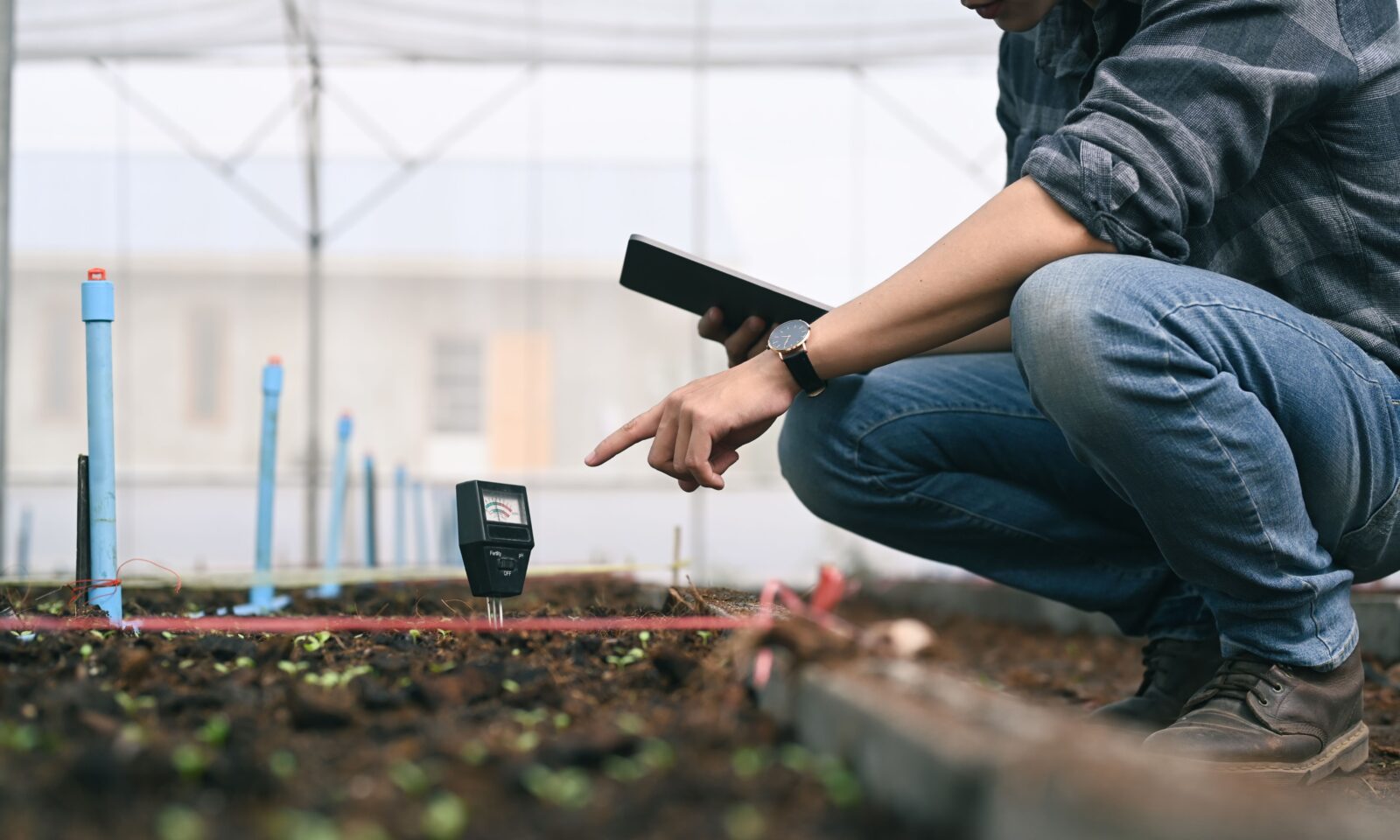
Soil moisture sensors play a crucial role in optimizing irrigation by detecting the exact water content present in the soil. This ensures that water is applied only when necessary, preventing over-irrigation that can lead to waterlogging, nutrient leaching, and fungal diseases. These sensors are especially useful in areas practicing precision farming or managing water scarcity during the dry season. In Bangladesh, moisture sensors are being introduced in vegetable, rice, and maize cultivation to save 30%–40% of water, boost efficiency, and protect groundwater reserves.
Drone Sprayers
Drones are transforming the way farmers apply pesticides and fertilizers. Uncrewed aerial vehicles can spray fields uniformly without compacting the soil, even in hard-to-reach or muddy areas. Drones reduce the time, labor, and health risks associated with manual spraying. Farmers in paddy fields and fruit orchards have found them particularly helpful for precision agriculture, responding quickly to pest outbreaks, and minimizing crop damage and chemical overuse.
Mobile Agriculture Apps (Krishi Batayon, iFarmer)
These apps directly provide farmers’ mobile phones with real-time farming guidance and decision support. Platforms like Krishi Batayon (government) and iFarmer (private) offer crop disease alerts, market price updates, weather forecasts, input recommendations, and access to credit and insurance. Many apps now include audio-visual content in Bengali, making them accessible to semi-literate farmers and women producers in rural Bangladesh. This digital access bridges the knowledge gap and empowers farmers to make informed decisions independently.
GPS-Enabled Tractors
GPS-integrated tractors allow for precision land preparation, ensuring optimal coverage and fuel efficiency. These machines are particularly valuable in large-scale farming operations and cooperative models. The GPS ensures straight-line plowing, minimizes overlap or missed areas, and can log data for monitoring efficiency and field coverage. This saves fuel and time and enhances the uniformity of crop establishment, resulting in improved yield.
Automatic Weather Stations
Installed across strategic agricultural zones, automatic weather stations (AWS) collect and transmit real-time climate data, including rainfall, humidity, wind speed, and temperature. This localized weather forecasting enables farmers to optimize sowing, fertilizing, and harvesting schedules. In regions like the Haor basins and coastal belts of Bangladesh, where rainfall patterns are shifting due to climate change, AWS plays a key role in preventing weather-related crop loss.
IoT-Based Smart Irrigation Systems
Internet of Things (IoT)-enabled irrigation systems automatically manage water application based on soil moisture and weather conditions. These systems can be linked with mobile apps or sensors and are often powered by solar energy, making them ideal for off-grid rural locations. Ensuring just-in-time watering saves resources, prevents over-irrigation, and protects the crop’s root zone, leading to improved water management and healthier crops. These systems are especially effective in vegetable farming, fruit orchards, and dryland rice cultivation.
Livestock Monitoring Devices
In real-time, wearable devices such as smart collars or ear tags monitor livestock health, activity, and reproduction. They can detect illness early, track feeding patterns, and alert farmers to changes in temperature or movement. In Bangladesh’s dairy and goat-farming clusters (e.g., Pabna, Sirajganj), these technologies help reduce veterinary costs, improve breeding success rates, and increase milk and meat yield. Farmers can receive alerts and health reports for each animal when integrated with mobile apps.
Image-Based Pest & Disease Detection
AI-powered mobile tools allow farmers to capture images of infected plants and receive instant diagnoses and treatment suggestions. Platforms like Plantix or tools integrated within agriculture apps can identify diseases, nutrient deficiencies, and pests using image recognition algorithms. This helps smallholders respond early, reducing crop loss and minimizing unnecessary chemical use while promoting integrated pest management (IPM) practices.
IoT-Enabled Greenhouses
Modern greenhouses equipped with IoT technology monitor and regulate internal conditions such as temperature, humidity, CO₂ levels, and lighting. These greenhouses allow year-round production, regardless of seasonal limitations. Commercial farms in peri-urban areas like Savar or Gazipur use IoT-controlled environments to grow high-value crops like tomatoes, strawberries, and leafy greens with minimal pesticide use and high efficiency. Data from these systems helps adjust inputs and improve yield forecasts.
Digital Market Platforms (Agroshift, Amar Krishi)
Digital Market Platforms like Agroshift and Amar Krishi act as digital marketplaces, allowing farmers to connect directly with buyers, input suppliers, and aggregators. By bypassing intermediaries, farmers can access better prices, quicker payments, and broader markets, thereby improving their market access. Platforms like Agroshift also help with logistics and doorstep delivery of inputs, while Amar Krishi offers a full-stack service combining inputs, advisory, and output marketing. Such digital access is crucial during crises like floods or pandemics when traditional market chains are disrupted.
Challenges in Adoption
While innovative farming tools offer multiple benefits, their widespread adoption in Bangladesh is limited due to:
• High upfront costs for smallholders with limited capital access
• Lack of awareness about digital solutions in remote areas
• Poor internet connectivity, especially in chars, haors, and hill tracts
• Digital illiteracy, particularly among older or female farmers who may not own smartphones
Policy Support & Way Forward
The Government of Bangladesh and its partners have initiated several steps to promote digital and smart agriculture, such as:
• Offering subsidized technology loans and packages via Smart Agriculture Loan Programs
• Running farmer awareness campaigns through Krishi Call Centers and TV/radio spots
• Collaborating with the private sector and development agencies (FAO, ADB, World Bank) to fund pilot programs and agri-tech incubators
To accelerate smart tech adoption, further emphasis is needed on:
• Public-private investment in infrastructure
• Youth agri-tech entrepreneurship
• Female-focused digital training and outreach
Conclusion
Innovative farming tools are not just a vision of the future—they are being used today to solve real problems in Bangladesh’s fields. These innovations offer multiple benefits for productivity, resilience, and sustainability, from conserving water to reducing chemical use and connecting farmers with markets. They have the potential to transform rural agriculture into a tech-driven, inclusive, and climate-smart sector that thrives in the face of growing challenges. This potential is a cause for excitement and optimism.
Greater access, affordability, training, and awareness are critical to maximizing their impact. With the proper support, these technologies can transform rural agriculture into a tech-driven, inclusive, and climate-smart sector that thrives in the face of growing challenges.
Contact:
If you have any questions, thoughts, or suggestions, please contact us or join our social media networks.
Email us: agribusinessedu@gmail.com, info@agribusinessedu.com
Feel free to comment:
Your email address will not be shared with anyone.
Join our LinkedIn group
https://www.linkedin.com/groups/13943442/
Join our Facebook group
https://www.facebook.com/groups/agribusinesseducationandresearchinternational
Read More:
What is Agricultural Technology?
Application of Drone in Agriculture
Scope and Importance of Agricultural Marketing
What are the Characteristics and Traits of an Entrepreneur?
Why is market information important?
Covid -19 Pandemic Impact on Agribusiness
E-Commerce and Supply Chain Finance
Technology Application in the Financial Section of Agribusiness
Role of IT in supply chain management in Agribusiness after Covid 19 Pandemic
Agile supply chain in Agribusiness
Supply chain Management Networks in Agribusiness
Strategic sourcing for supply chain management strategy
What is the supply chain management process in Agribusiness?
What is Supply Chain Management in Agribusiness?
Supply chain Management and Agribusiness

